
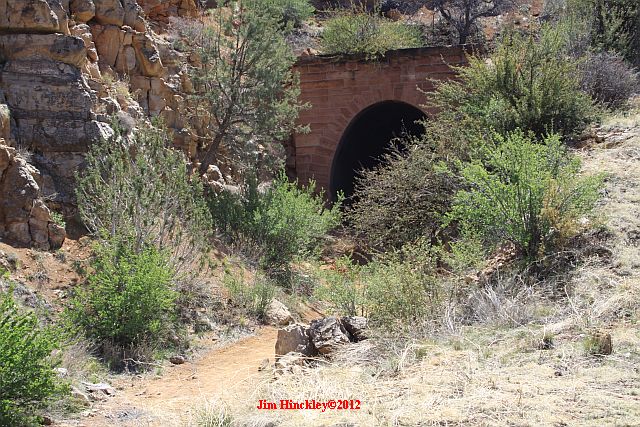
Walkabouts with Jim, an idea for a new program series that would add a new dimension to our ongoing quest to share America’s story, and tell (or show) people where to go. An example of what is being envisioned is this blog post about a hike to the territorial era time capsule that is the 1880s Johnson Canyon Railroad Tunnel.
The trip to the old railroad tunnel from Kingman, Flagstaff, or Phoenix is a great day trip. It includes a moderate hike that blends stunning scenic wonders, lots of history (including two alignments of Route 66, and a one of a kind relic that is a tangible link to early Arizona railroad history.
But I really can’t take credit for the idea of a walkabout series. And I haven’t exactly formulated a plan for developing this so that it is a facet of Jim HInckley’s America rather than something seperate. It will need to infuse our passion for inspiring adventures and sharing America’s story that is made manifest in this website as well as Coffee With Jim, our weekly podcast, with an infectious spirit.
A few days ago I shared a walkabout with Jim on our YouTube channel. Comments received about that shared adventure in the Cerbat Mountains, as well as those received from the walkabouts that I share on Instagram, in social media posts, and blog posts have been the catalyst for the idea of creating a Walkabouts With Jim series.
For adventurers, history buffs, and road trip enthusiasts, the Johnson Canyon Railroad Tunnel near Ash Fork, Arizona, is a hidden gem of the Southwest. This long-abandoned tunnel was an engineering marvel that nearly bankrupted the Atlantic & Pacific Railroad. And during WWII is was a critical link in the Santa Fe Railroad system that was worthy of having a gun emplacement built and manned on the hill above.
It now serves as a ghostly reminder of a bygone era and an off-the-beaten-path hiking destination. But the tunnel is just the beginning.
If you love history, picturesque western landscapes, and a little walkabout adventure, here are a few Jim Hinckley-recommended hikes that will take you through time and terrain like never before. Let’s start with the Johnson Canyon Railroad Tunnel.
Johnson Canyon Railroad Tunnel – Ash Fork, Arizona
Tucked away in the rugged high desert of northern Arizona, the Johnson Canyon Railroad Tunnel was completed in 1883 as the Atlantic & Pacific Railroad built a railroad line to the Colorado River. By the late 1950s, the tunnel was abandoned as the railroad rerouted tracks to to the north as the narrow confines of Johnson Canyon weren’t feasible for construction of a double line.
Today, the site is an eerie yet fascinating place to explore. The tunnel itself, about 400 feet long, remains accessible, though visitors should be cautious of loose rock and debris, as well as snakes if hiking in warmer months. All along the old rail bed there are remnants of trestles and other infrastructure. There is also a massive trash pile at the site of Welch station.
Hiking to the Tunnel
- Distance: Approximately 2.4 miles from the Forest Road 6 (FR6) intersection to the tunnel entrance, totaling around 4.8 miles round trip. It should be noted that road is not maintained and can be rocky, rutted or muddy depending on weather.
- Elevation Gain: Minimal, making it accessible for most hikers.
- Duration: Plan for about 5 to 6 hours to complete the hike, allowing time for exploration and breaks.
- Difficulty: Moderate due to uneven terrain and potential obstacles. You will simply be following the old rail bed, and crossing a few ravines where the trestles are gone.
Directions to Trailhead from phoenix:
- From Phoenix:
- Take I-17 north to Flagstaff.
- Merge onto I-40 west toward Los Angeles.
- Pass Williams and take Exit 151 (Welch Road).
- Cross the cattle guard onto FR6.
- Continue as FR6 bends east, joining an old section of Route 66.
- After about a mile, FR6 splits north; follow it, crossing Johnson Creek.
- Approximately 2.5 miles from the I-40 exit, you’ll spot Johnson Crater on the west side.
Hiking Route:
- Starting Point: Park along FR6 near Johnson Crater.
- Route: Follow the old railroad bed toward the tunnel. Along the way, you’ll encounter remnants of trestles and infrastructure, offering glimpses into the area’s railroad history.
- Tunnel Details: The tunnel is approximately 400 feet long with a gentle left curve. The west entrance showcases impressive stone masonry, and inside, riveted steel boilerplate ceiling linings are evident—a testament to repairs after an disastrous 1898 fire.
Safety and Considerations:
- Access: The hike is relatively. But always let someone know where you are going and when you plan on returning.
- Terrain: Be cautious of loose rocks, debris, and potential erosion near the tunnel entrances.
- Wildlife: Rattlesnakes and other wildlife inhabit the area. Stay alert and maintain a safe distance if encountered.
- Preparation: Wear sturdy footwear, carry sufficient water, and consider bringing a flashlight for the tunnel, although natural light penetrates due to its short length.
Additional Points of Interest:
- Johnson Crater: A notable geological feature near the trail, worth a brief exploration.
- Flora and Fauna: The area is home to diverse plant species, as well as wildlife such as tarantulas, deer, coyote, bear, bobcat, mountain lion, rabbit, fox, badger, and various bird species.
More Hikes to Explore
Gila Cliff Dwellings – New Mexico
For a hike that blends archaeology with breathtaking scenery, the Gila Cliff Dwellings National Monument north of Silver City in southwestern New Mexico offer an unforgettable experience. Built by the Mogollon people over 700 years ago, the dwellings are nestled within rugged canyon walls.
The moderate loop trail that begins at the visitor center and that crosses a branch of the Gila River takes visitors past and into the well-preserved ruins and offers stunning views of the surrounding Gila Wilderness. It’s a great way to step back in time while immersing yourself in nature.
The drive north from Silver City through the forested wilderness and the ghost town of Pinos Altos is one of my favorites. One more tip. Consider renting a cabin or camping at Doc Campbells near Gila Hot Springs.
Arizona Peace Trail – Hualapai Mountains
If you’re up for an off-road adventure, the Arizona Peace Trail is a must. Spanning over 675 miles, the largest OHV loop trail in the United States crosses some of the most beautiful, diverse, and remote backcountry in the United States.
This multi-use trail winds through the Hualapai Mountains, Colorado River Valley, and Sonoran Desert, offering unparalleled views and remote backcountry terrain. The trail is ideal for OHV riders, but certain sections can be explored on foot, revealing hidden canyons, petroglyphs, and diverse wildlife.
Hualapai Mountain Park, a pine forested oasis has miles of shade dappled hiking trails that climb high into the mountains. This is an ideal recreation are during the searing months of summer, and Haulapai Mountain Resort has a delightful restaurant after working up an appetite as well as a rustic motel with wonderful views.
Supai, Arizona & the Legendary Waterfalls
One of the most breathtaking hikes in the country, the journey to the village of Supai and its legendary waterfalls is a bucket-list adventure. This is the most remote community in the lower 48 states. The mail and packages are still delivered by mule train!
Located within the Havasupai Indian Reservation, this 10-mile trek leads to vibrant turquoise waterfalls cascading through red rock canyons. Havasu Falls, Mooney Falls, and Beaver Falls are the main attractions, each more spectacular than the last. Permits are required, and reservations fill up quickly, so plan ahead.
There is a hotel and general store in the village. And there is a campground at the falls.
The drive starts in Kingman, Arizona and continues east on iconic Route 66. From Peach Springs to Hualapai Hilltop at the head of the canyon, the parking lot, corrals, and helipad, there are no services. So, be prepared. the drive from Kingman to the hilltop is just over 120 miles.
Hartwick Pines Trail – Michigan
The desert southwest is my home. I have wandered this diverse and often desolate land so long that it would be easy to consider me to be one of the dry roasted nuts. But I am a fan of the walkabout, be it on the streets of Heidelberg in Germany, in the Cerbat Mountains of Arizona, or the deep forests of Michigan.
So, for those who appreciate towering trees and the whispers of history I present Hartwick Pines State Park in Michigan as a serene hiking experience. The park is home to one of the last remaining stands of old-growth white pines in the Midwest.
The trails, including the 1.5-mile Old Growth Trail, wind through majestic forests that transport hikers back to the logging era of the 1800s. A visit to the Logging Museum adds depth to the experience, making it a perfect blend of nature and history.
Final Thoughts
From the ghostly echoes of steam locomotives in Johnson Canyon to the roaring beauty of Havasu Falls, these hikes offer a glimpse into America’s past while immersing adventurers in some of its most spectacular landscapes. So pack your hiking boots, grab your camera, and set out on a journey that combines history, nature, and a touch of the unexpected.
And just as with road trip inspiration, as always, Jim Hinckley’s America is here to help you discover where to go and why it matters on walkabouts with Jim. See you on the trail! And you prefer adventures from the comfort of the recliner, become a follower of this website or our YouTube channel.

Thank you. Shared adventures are the best adventures.